Drop Away: Color Puzzle
- 4.4
- Rating
- 1.00M
- Installs
- Free
- Price

 Analysis by App-foxy
I first approached Drop Away: Color Puzzle as the sort of game people open for a quick break, but its real appeal becomes clearer when you imagine it on a shared household phone or tablet. It is a free puzzle game from Rollic Games, built around a simple color-focused challenge rather than a large story, complicated controls, or a long setup. That makes it easy to hand to someone else, although the simplicity also means the experience depends heavily on whether you enjoy repeating short mental challenges.
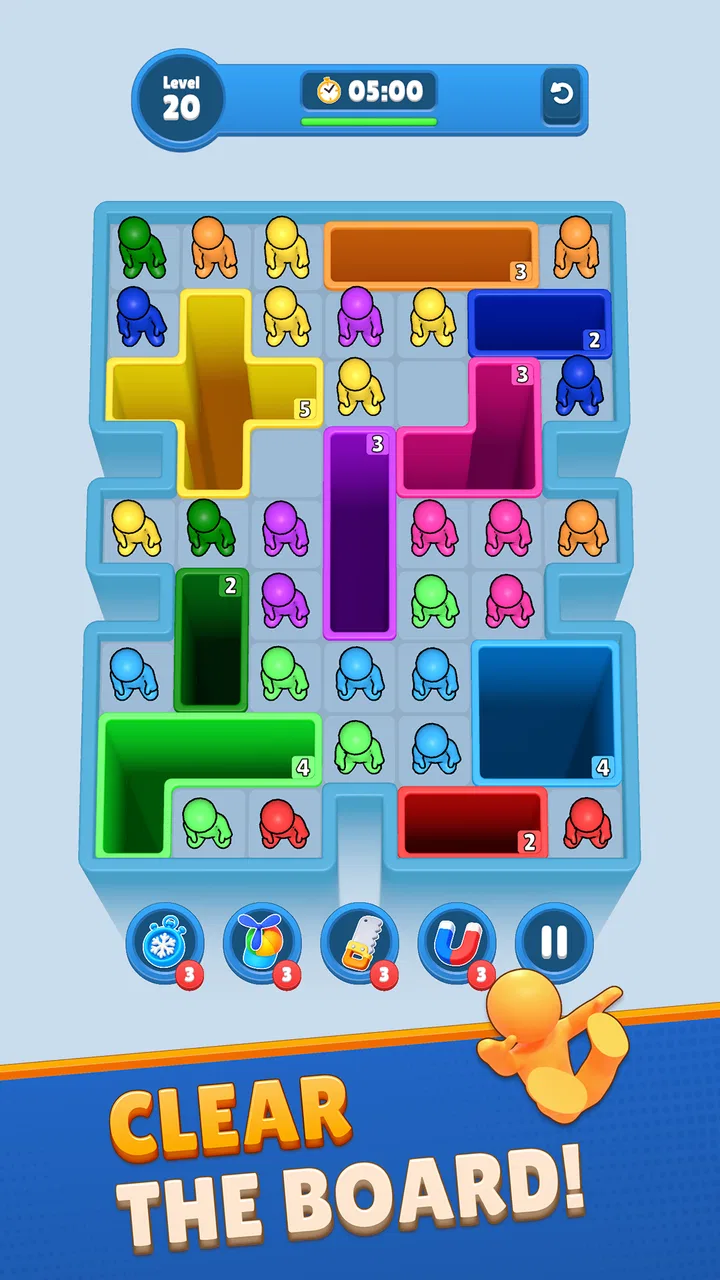
The game sits comfortably in the casual puzzle space. Its store summary presents it as an ongoing puzzle challenge, while the short description reduces the idea to “Drop Away.” I would describe it in more practical terms: this is a pick-up-and-play title for people who like arranging, matching, or clearing visual patterns and gradually improving their decisions. It is free to download, rated for Everyone, and available for devices running Android 7.0 or newer. Those details make it approachable, but they do not automatically make it suitable for every person sharing the same device.
How it works in an everyday shared-device routine
In my experience, the strongest use case is a short pause when one person has finished using the household device and another wants something immediately interactive. A child might play for a few minutes after homework, a parent might use it while waiting for an appointment, or two people might pass the device back and forth to compare how far they can get. Because the central idea is visual and puzzle-based, nobody needs to learn a large control scheme before starting.
You May Also Like

 Blood Strike: 2.5 Anniversary
Blood Strike’s Loadouts Turn Every Drop Into a Tactical Gamble
A close look at Blood Strike’s custom loadouts: how fast access to signature weapons reshapes its battle royale rhythm, rewards preparation, and narrows the gap between fights.

 Pandora - Music & Podcasts
Pandora’s Music Is Easy to Start, but Harder to Recover
Pandora’s strength is its low-effort path from a seed to a station. Its weak spot is how much confidence it asks you to place in connection, setup, and quiet recovery.

 8 Ball Pool
 Is Built on Rivalries, Rematches, and Routine
A close look at the rivalries, rematches, shared routines, and unanswered safety questions that turn a quick pool match into a persistent mobile community.

 Samsung Music
’s Quiet Strength Is Playing What You Already Own
Its reach comes less from spectacle than from dependable access to a personal library. That simplicity is both the app’s strongest retention engine and its ceiling.

 AccuWeather: Weather Radar
AccuWeather Review: A Quick, Clear Forecast for Everyday Decisions
For everyday plans, the best forecast is the one you can understand quickly. AccuWeather makes rain timing, radar, and local conditions easy to act on, with a few trade-offs.

 Hill Climb Racing
Why Hill Climb Racing Still Turns Crashes Into One More Run
A tiny car, a bumpy hill and one more upgrade: Hill Climb Racing keeps resurfacing because its simple chaos makes every near-miss feel personal.
More From Our News Desk
View All News


That convenience is different from the appeal of a board game or a traditional multiplayer title. A board game asks everyone to sit down together and agree on rules. A competitive online game usually connects players through accounts, matchmaking, or a live session. This game is better suited to informal turns: one person makes a few moves, hands over the device, and the next person tries to make smarter choices. I would not treat that as built-in multiplayer, but it can still create a small shared challenge in the living room.
The most useful household habit is to decide whose turn it is before opening the game. That sounds obvious, yet short-session puzzle games are easy to treat as “just one more move,” especially when the next decision looks nearly solvable. If several people use the same device, a simple verbal agreement prevents arguments over progress. The game itself should not be mistaken for a shared profile or a family scoreboard; the social part comes from the people using it, not from any feature I would assume exists.
For solo play, I like the fact that the activity can fill a narrow gap in the day without demanding a long commitment. It is a better match for a bus ride, a waiting room, or a quiet moment than for someone seeking a deep campaign. The trade-off is that repeated puzzle sessions can begin to feel similar if you prefer narrative variety, character development, or constantly changing environments.
What makes the puzzle format work
The color-based presentation gives the game an immediate visual identity. You can understand the broad purpose of a move by looking at the board instead of reading lengthy instructions. That matters on a shared device because a new player can watch for a moment and understand the basic rhythm from observation. It also makes the game less intimidating for someone who does not normally play mobile games.
At the same time, visual simplicity should not be confused with a lack of decisions. In a color puzzle, an attractive move is not always the best move. Clearing something immediately may leave an awkward arrangement, while waiting can create a more useful chain or open space for later choices. My practical advice is to pause before tapping the obvious match and inspect the whole visible layout. The best move is often the one that preserves options rather than the one that produces the quickest small result.
That habit becomes especially useful when another household member takes over. Instead of saying only “try this,” the previous player can explain why a move was saved or why a particular color was left in place. This turns a solitary puzzle into a low-pressure way to practice planning. It is a more meaningful shared activity than simply watching someone play, while still remaining casual enough for short turns.
I also recommend treating each attempt as information rather than as a test of intelligence. If a layout goes badly, notice which early choice reduced future options. That approach helps younger players and impatient adults alike, because it shifts attention from failure to pattern recognition. It also reduces the temptation to make random taps just to finish a difficult moment.
Setting boundaries before someone else uses it
The game is free, but it includes in-app purchases ranging from $0.99 to $99.99 per item. That is the most important setup issue for a shared device. Before handing it to a child or guest, I would make sure the device’s purchase protections match the household’s rules. I would not rely on the game’s free download as proof that every interaction is cost-free.
This is not a criticism unique to this title; it is a practical distinction between downloading an app and managing a device used by several people. A parent may be comfortable with a child playing but not with unsupervised purchasing. Another household may allow purchases only after asking first. The right boundary belongs in the device and household routine, so I would establish it before the first shared session rather than after an accidental tap.
It is also worth separating the game experience from the identity of the person playing. If one person’s progress is mixed with another person’s decisions, disagreements can follow even when nobody intended to cause a problem. I would avoid letting several players treat one ongoing run as if it belonged to everyone. A useful arrangement is to give each person a turn and agree that the current board belongs to whoever started it, unless the group explicitly decides to solve it together.
That boundary is particularly important for puzzle players who care about making perfect choices. A younger player may experiment, while an older player may want to preserve a careful run. Neither approach is wrong, but they are different goals. If the device cannot keep those experiences separate, the household should decide whether experimentation or preservation matters more before play begins.
Coordinating turns without pretending it is a multiplayer game
When I compare this with usual alternatives in the puzzle category, I see three broad choices. A classic match-style game often emphasizes fast reactions and frequent visual rewards. A logic-grid or number puzzle usually offers slower, more deliberate reasoning. A shared tabletop puzzle encourages conversation because everyone can see the same pieces. Drop Away: Color Puzzle falls between those styles: it is more immediately visual than a traditional logic puzzle, but it can reward patience more than a purely reflex-based title.
That middle position makes it useful for informal coordination. One person can suggest a move, another can challenge the suggestion, and the player holding the device decides. This creates conversation without requiring the game to support simultaneous play. I would be careful, however, not to call that cooperative mode. The app is still being used by one active player at a time, and the household is supplying the teamwork.
A simple turn system works well. Give each person a fixed number of moves, or switch players whenever a small objective is reached. Avoid changing hands after every tap, because that can make the puzzle harder to follow and may encourage rushed choices. Longer turns let the player form a plan, while a clear handoff prevents one person from quietly taking over the entire session.
Another useful approach is “observer first.” A new player watches one short sequence, then explains what they think the next move should be before touching the screen. This is not about policing the answer. It helps the observer notice color relationships and gives the active player a chance to explain a different plan. In a family setting, that can make the game feel collaborative without turning a casual activity into a lesson.
The main limitation is that this kind of coordination depends on goodwill. If one player dislikes advice, or if another person becomes overly competitive, the shared-device appeal quickly weakens. In that situation, a proper cooperative game or a physical puzzle may be a better choice because its rules are designed around group participation rather than informal turn-taking.
Age context and the question of trust
The Everyone content rating makes the game broadly approachable from an age-label perspective. I would still treat the rating as a starting point, not as a complete household decision. Age suitability also depends on how a child handles frustration, how the device manages purchases, and whether the adult responsible is comfortable with the child using the screen independently.
For a younger player, the color-driven format may be easier to understand than a game filled with text, dialogue, or complex menus. An adult can introduce it by playing alongside the child and asking what they notice on the board. That gives the child room to make choices while making it easier to see whether the pace and difficulty feel enjoyable rather than stressful.
For older children and adults, the question is less about comprehension and more about repetition. Someone who enjoys optimizing a move sequence may find plenty to think about, while someone who needs a strong story or a social competition may lose interest quickly. I would recommend it to a person who likes compact visual problems, not simply to anyone who wants a “family game.” Family-friendly and family-engaging are not always the same thing.
Trust also matters when the device is shared between adults. A partner or roommate may be happy to use the game casually but may not want their progress changed, their screen time interrupted, or purchases associated with their device profile. A quick conversation about those expectations is more effective than assuming that a free puzzle app has no consequences beyond entertainment.
The current version is 1.28.1, and the game has reached over one million installs with an average rating of 4.4 from roughly thirty thousand ratings. Those figures suggest that the format has found a substantial casual audience, but they should not replace personal judgment. Popularity can tell me that the basic idea is accessible; it cannot tell me whether the visual style, challenge curve, or purchase boundaries suit my household.
Where it fits among everyday puzzle choices
I would choose this game over a word puzzle when I want less reading and more immediate visual decision-making. I would choose it over a number puzzle when I want something easier to demonstrate to another person on the sofa. I would choose a traditional match game instead if I wanted a more familiar rhythm with quick, obvious rewards and less emphasis on preserving future options.
On the other hand, I would choose a deeper logic game for a long, quiet session where I want one problem to occupy my attention for a substantial period. I would choose a cooperative tabletop puzzle when the main goal is conversation between several people. The strength here is not that it replaces all those alternatives; it is that it occupies a convenient middle ground for short, visual, individual turns.
One non-obvious advantage of that middle ground is how little explanation a household needs before trying it together. A parent does not have to translate a complicated fictional setting, and a guest does not need an account introduction before taking a turn. The disadvantage is equally clear: because the core interaction is compact, the game may not provide enough variety for a long group gathering.
I also would not recommend it as a substitute for a child’s entire screen routine. A puzzle can be constructive and still become repetitive or absorbing in an unhelpful way. The better use is a defined break with a clear stopping point agreed in advance. That keeps the game in its strongest role: a small activity that fits around daily life instead of trying to become the center of it.
My household verdict
After looking at it as both a solo puzzle and a shared-device option, I see a clear audience. It suits people who want a free, approachable color puzzle that can be learned by watching and played in short turns. It is especially convenient when a household wants something one person can start immediately while others offer suggestions from nearby.
I would skip it for anyone looking primarily for real-time multiplayer, a substantial story, or a puzzle experience that changes dramatically from one session to the next. I would also be cautious about putting it on an unrestricted shared device because the presence of in-app purchases makes household purchase rules important. Those are not deal-breakers, but they are practical conditions for a comfortable experience.
My best recommendation is to try it with a small routine: decide who owns the current run, agree on purchase boundaries, and use turns long enough for each player to make a plan. If the household enjoys discussing why a color move is strong, the game can become more engaging than its brief store description suggests. If everyone wants independent progress or a richer group structure, another puzzle format will probably serve them better.
Overall, I find the game most convincing as a lightweight visual challenge rather than as a complete family entertainment system. Its free entry, Everyone rating, and simple presentation remove much of the initial friction, while its repetitive nature and purchase options require sensible boundaries. For a quick solo break or an informal pass-the-device puzzle session, Drop Away: Color Puzzle is an easy recommendation, provided you understand what it is—and what it is not.
FAQs for Drop Away: Color Puzzle
01What is Drop Away: Color Puzzle, and how is the game played?
Drop Away: Color Puzzle is a casual puzzle game centered on arranging or dropping colored pieces to solve increasingly challenging boards. The controls are designed to be simple, making it easy to start playing immediately, while the difficulty gradually increases as new patterns and obstacles appear. It is suitable for short sessions, although later levels may require more planning and patience.
02Is Drop Away: Color Puzzle free to download and play?
The game can generally be downloaded for free, allowing players to try its main puzzle experience without an upfront purchase. However, free mobile games may include optional advertisements, in-app purchases, or both. These can sometimes provide hints, extra attempts, or other conveniences. Before downloading, check the current store listing for the exact pricing model and available purchase options.
03Does Drop Away: Color Puzzle work offline?
Many of the core puzzles can usually be played without a constant internet connection, which makes Drop Away: Color Puzzle convenient for travel, commuting, or areas with unreliable service. Nevertheless, an internet connection may be required for advertisements, purchases, updates, analytics, or certain online features. It is best to launch the game once while connected before relying on it completely offline.
04Is Drop Away: Color Puzzle suitable for children and casual players?
The game is approachable for casual players because its basic mechanics are easy to understand and do not require complicated controls. Its colorful presentation and short levels may also appeal to younger users. However, parents should review the age rating, advertising content, privacy information, and in-app purchase settings on the relevant app store, since these details can vary between versions and regions.
05What should I know about difficulty, ads, and in-app purchases before installing?
Drop Away: Color Puzzle is best suited to players who enjoy repetitive, relaxing challenges with gradually more demanding solutions. Some levels may feel simple at first, while later puzzles can require careful timing or several attempts. Depending on the version, advertisements may appear between stages or after using certain features, and optional purchases may remove ads or provide assistance. Review the store details before downloading.
Pros
- Simple rules make it easy to start playing immediately.
- Colorful visuals create a pleasant and relaxing puzzle experience.
- Short levels are convenient for quick gaming sessions.
- Progressive challenges keep the gameplay engaging over time.
- Works well for players who enjoy calm
- casual brain teasers.
Cons
- Later puzzles may feel repetitive for experienced puzzle fans.
- Some levels can be difficult to solve without trial and error.
- The game may offer limited variety beyond its core mechanic.
- Ads can interrupt the experience
- depending on the version.
- Players seeking competitive features may miss leaderboards or multiplayer.

Drop Away: Color Puzzle
Gallery